Juilee Decker, Ph.D.
Humanities Scholar | Cultural Heritage Imaging Researcher | Museum Studies Educator | Builder of International Research Networks
Labs
Two Laboratories, One Mission:
Discovery Through Collaboration
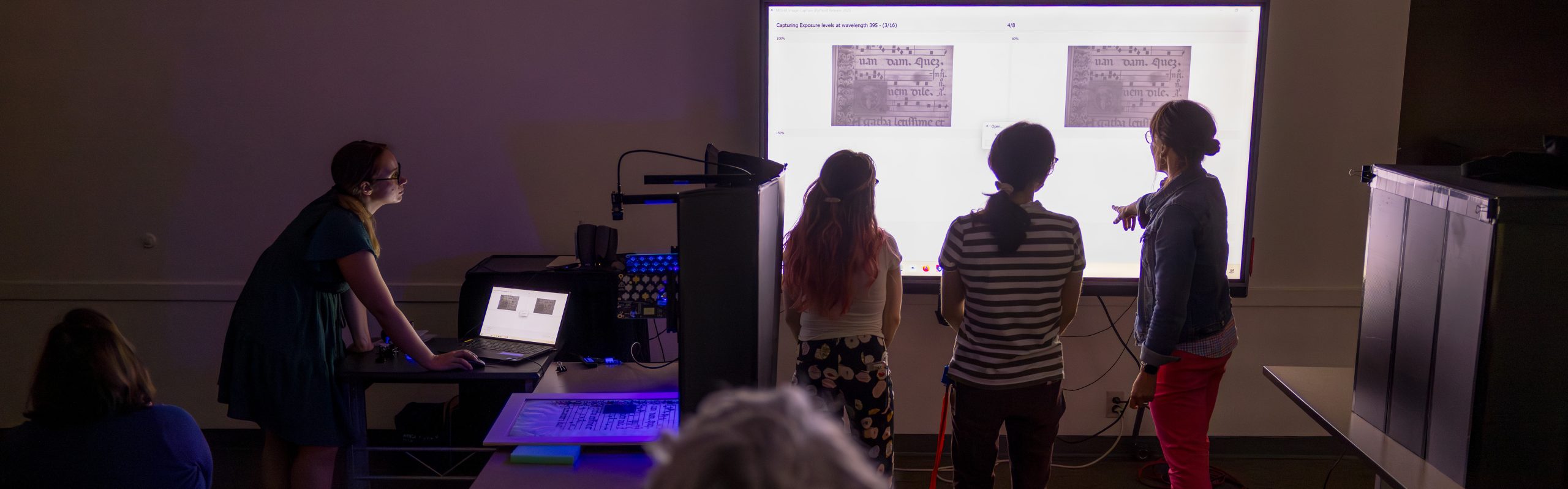
My work is anchored in two laboratories that bring together students, faculty, cultural organizations, and community partners through hands-on research and experiential learning: CHI Lab and MUSE Lab.

“Together, these laboratories reflect my belief that learning and discovery happen best through collaboration, creativity, and direct engagement with real-world challenges.” Juilee Decker, Ph.D. Program Director, Museum Studies at RIT & Co-Director of the Cultural Heritage Imaging Lab
Cultural Heritage Imaging Lab
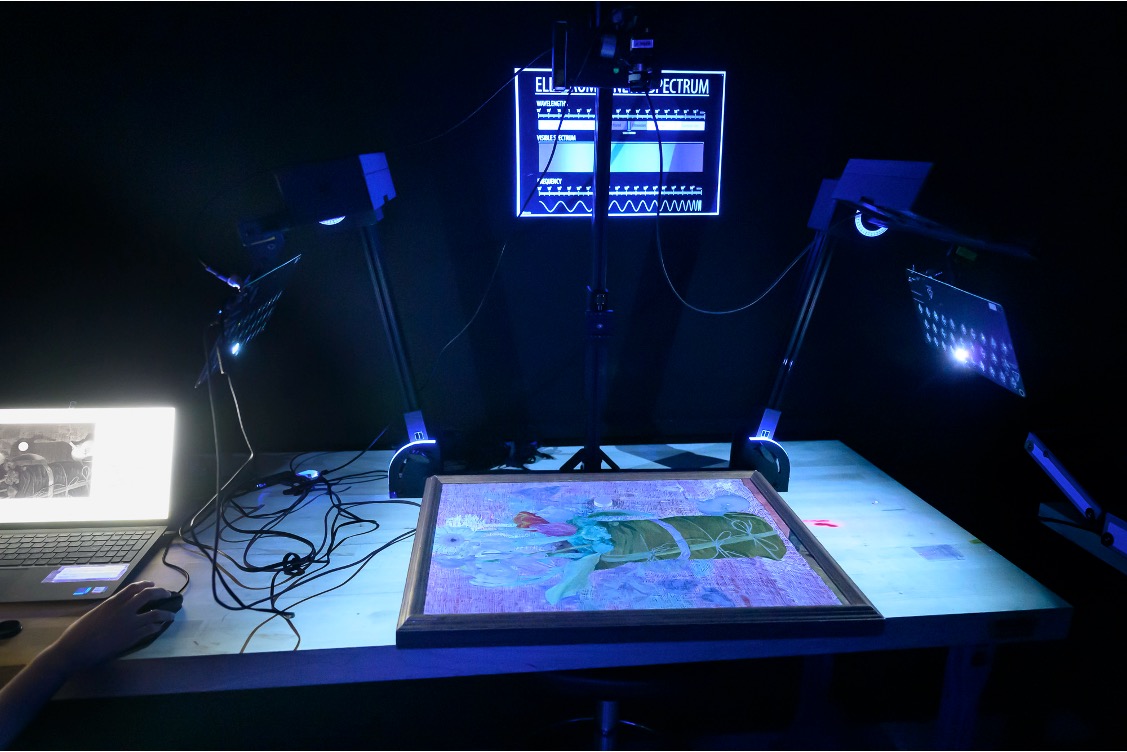
The Cultural Heritage Imaging Lab is an interdisciplinary research environment developed through collaboration between the humanities and imaging science. As Co-Director, I work alongside colleagues and students to develop and apply imaging technologies that help recover hidden information from cultural heritage materials while expanding access to collections and research resources. The lab serves as a hub for innovation, student engagement, professional training, and international collaboration. Our work connects scholars, librarians, archivists, museum professionals, conservators, and technologists through shared projects and a commitment to making advanced imaging techniques more accessible.
For more on the lab, see our website and read the recent publication by RIT’s University News by Felicia Swartzenberg and media by Traci Westcott.
MUSE Lab
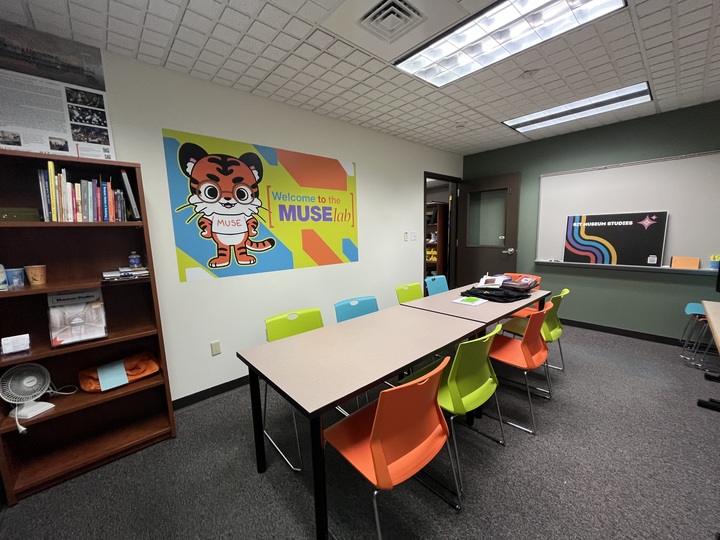
The MUSE Lab—the Museum Studies Program’s exhibition and experiential learning laboratory—is a collaborative workspace where students, faculty, museums, archives, libraries, and community partners come together to explore the many ways cultural heritage is researched, interpreted, managed, digitized, exhibited, and shared with public audiences. As the program’s primary hub for experiential learning, the lab reflects our commitment to a technology-infused, collections-based curriculum that combines humanities inquiry with hands-on practice.
Through project-based partnerships and applied learning opportunities, students gain practical experience in exhibition development, collections research, interpretation, digital humanities, audience engagement, and public-facing scholarship. The lab serves as a bridge between academic learning and professional practice, allowing students to contribute to meaningful projects while developing the skills necessary for careers in museums, archives, libraries, galleries, historic sites, and other cultural organizations.
Current student research and collections-analysis projects underway in the lab include work in partnership with the National Warplane Museum in Geneseo focused on the life and legacy of a Tuskegee Airman and the recovery of World War II aircraft; digitization and transcription of letters written during the 1918–1919 influenza pandemic; and exhibition design projects that will culminate in both online and onsite exhibitions at RIT and partner venues. Through these experiences, students engage directly with collections, communities, and contemporary issues while developing the professional expertise needed to shape the future of cultural heritage practice.
For more on the labs, see these labs and the ecosystems of which they are a part, see the university facilities website.
To see examples of student exhibition work, see the exhibitions portion of this website.
Come visit our Cultural Heritage Imaging Lab, in partnership with Imaging Science at RIT.
Come visit our MUSE Lab with materials for exhibition prep as well as 3-D imaging and digitization for exhibitions and visitor engagement.

